Week 7 UX: An Observation on Google+


Developed by Google in 2011, Google+ was an attempt from Google to make a social media platform akin to Facebook or Twitter.

 I will explain the issues with Google+ using five of the Ten Usability Heuristics for User Interface Design. 

  1.  Google+ was an example of poor Consistency and standards. An example below is the messy layout as there's no clear indication of what a user should place their eyes on first. Violation Score: 4
  2. Google+'s User control and freedom were flawed. The data breach that occurred in 2018 effectivity caused the platform to lose many users since that year. Violation Score: 4


  3.  Google+'s  Flexibility and efficiency of use were poor. A big example of this was the Circles feature. On paper, this sounds like a great way to group things, but the problem arises when the user realizes that the info on the circle itself is vague.  Violation Score: 4
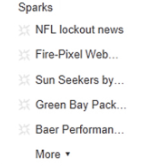
  4. The Recognition rather than recall of Google+ was problematic. An example of this would be how the Sparks feature worked: you had to pick a series of channels related to that topic.  Violation Score: 3

  5. The Visibility of the System Status of  Google+ was poor. An example would be its Email system. unlike Gmail, Google+'s email would display the same things seen in its notifications, which is ironically more faster to access. Violation Score: 4

Comments

Popular posts from this blog

Art Analysis: “Batman” by Lino Tagliapietra

Remember: Don't confuse this with the Dark Knight.   Created in 1998 by Lino Tagliapietra, this glass artwork takes heavy inspiration from Australian tools such as the Boomerang. The design of the glass artwork bears a striking resemblance to Batman’s Batarang weapon due to its shape, although the infamous DC comic book character of the same name has no relation to this glass. Batman uses a simple yet effective color palette of red and blue, in which the former color makes up a quarter of the paint used, while the latter is utilized in the middle of the glass. The glass texture on Batman features a wrinkle-like appearance, and the U shape of the glass conveys a sense of emotion. The design choices for  Batman  are clever and effective. Lino strategically uses only two colors, red and blue, which are usually associated with joy and freedom. As a result,  Batman  perfectly captures the feeling of positive energy. The design of  Batman  is very organi...

Week 5 UX: An Observation on Twitter/X

Twitter, a social media platform acting as a microblog, was created in 2006. In 2023, it was rebranded as X, with a stylized letter X replacing the bird as its logo. For this post, I'll call it Twitter.  Using 10 Usability Heuristics for User Interface Design, I'll explain what's wrong with this social media app. Twitter has inconsistent icons for actions, which will confuse users. An example is the share icon on both the web and mobile versions of Twitter. Violation Score: 3 Twitter is poor with User control and freedom due to its habit of constantly changing its layout every few years. Violation Score: 4 2006 2014 2023 Twitter's Flexibility and efficiency of use are poor. For example, there is no way a user can sync drafts or threads between web and mobile. Violation Score: 4 The mobile Twitter App Aesthetic and minimalist design is flawed due to the overall layout. An example would be the spaces feature, which takes a large portion of the viewing screen, causing clut...

Week 6 UX: An Observation on Pinterest.

 This website was launched in 2010 and is a website that houses numerous pictures and videos.  I will explain the issues with Pinterest using five of the Ten Usability Heuristics for User Interface Design.  Pinterest's Flexibility and Efficiency of Use could be better. Just from the front page alone, there's a bonanza of images without context about the ideas, such as "How to make this?" Violation Score: 4 The Consistency and Standards of Pinterest could be more consistent. If a user wants to scroll toward something they're looking for, some images appear in the result and have no relation to the topic type. For example, I typed in Pumpkin and was expecting this - 🎃 rather than the image below. Violation Score: 4 In the case of a Match between the system and the real world, Pinterest needs improvement in this area. A major problem I have with Pinterest is the lack of curation and its habit of reposting content without mentioning its original source. Here's an...